
Industry News
Edge Banding Glue Line Problems: Why Black Seams Make Cabinets Look Cheap
Edge Banding Glue Line is often the first detail that separates premium cabinetry from ordinary panel furniture. A cabinet door may use good board, modern color, and clean hardware, but if the seam shows a dark line, thick glue mark, or uneven edge, the whole product feels cheaper.
This guide explains why visible glue lines appear, how invisible seam technology works, and how high-end cabinetry manufacturers can improve seam quality through better adhesive control, trimming, scraping, buffing, and fully automatic edge banding machines.
Table of Contents
Why a Visible Edge Banding Glue Line Makes Cabinets Look Cheap
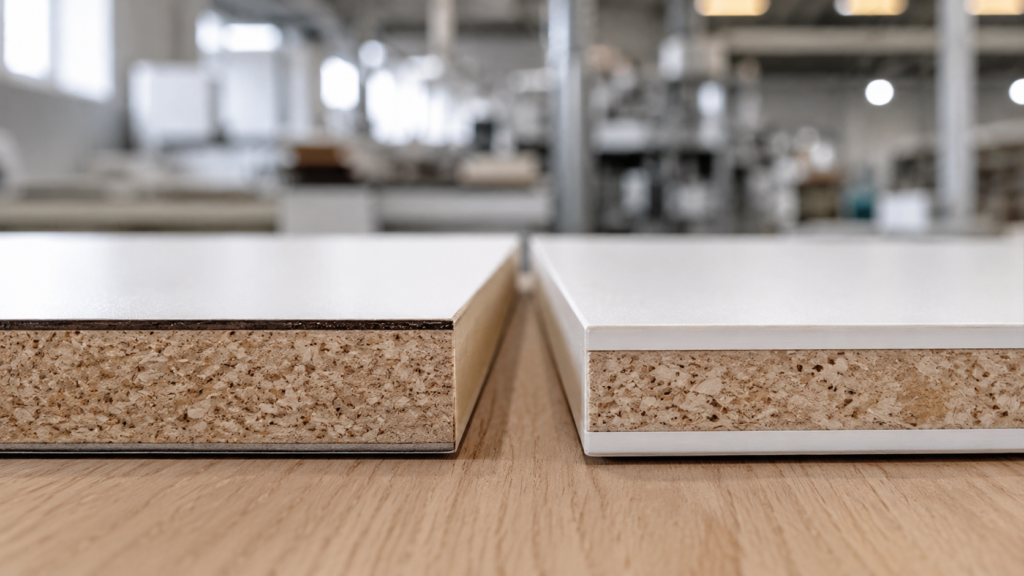
A visible Edge Banding Glue Line is not only a technical defect. It is a visual interruption. On white, light gray, matte, PET, acrylic, and high-gloss panels, even a thin black seam can stand out under side lighting.
Customers may not understand glue temperature or pressure rollers, but they can immediately see whether an edge looks clean. In high-end cabinetry manufacturing, that small line affects perceived value, brand image, and customer confidence.
Modern zero-joint and invisible seam technology exists because furniture manufacturers are under pressure to create cleaner, more durable, more premium edges. REHAU’s zero-joint edgebanding page describes laser and hot-air technology as a way to create a seamless, adhesive-free finish for higher-quality cabinetry surfaces.
What Causes Edge Banding Glue Lines to Appear?
An Edge Banding Glue Line usually appears because several small problems happen together. The most common causes are poor glue control, unstable temperature, weak pressure, inaccurate trimming, or material mismatch.
Typical causes include:
- Too much adhesive
- Too little adhesive
- Glue temperature too low
- Glue temperature too high
- Pressure rollers not set correctly
- Dust or chips on the board edge
- Edge band color not matching the panel
- Uneven board edges
- Dull trimming tools
- Poor scraping or buffing
In other words, the Edge Banding Glue Line is rarely caused by glue alone. It is usually a process-control problem.
Invisible Seam Technology Is More Than “Less Glue”
Invisible seam technology does not simply mean applying less adhesive. If glue is reduced too much, bonding strength drops and open seams can appear later.
A cleaner seam depends on the whole process:
1.The board edge must be flat and clean.
2.Adhesive must melt and flow correctly.
3.The edge band must match the panel color.
4.Pressure must be stable along the full edge.
5.Trimming must be accurate.
6.Scraping must remove small tool marks.
7.Buffing must finish the surface evenly.
That is why Edge Banding Glue Line control should be treated as a finishing system, not a single machine setting.
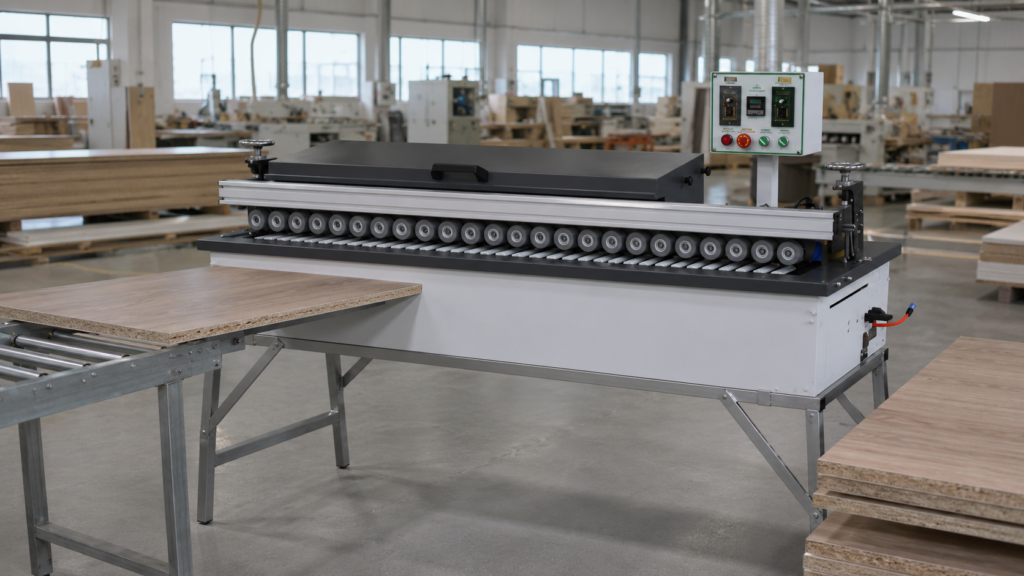
How to Minimize Edge Banding Glue Lines with Fully Automatic Edge Banding Machines
The answer starts with consistency. Manual adjustment may work for one panel, but premium cabinet production requires the same result across hundreds of doors, shelves, and side panels.
A well-configured automatic edge banding machine helps stabilize:
- Panel feeding speed
- Glue application
- Pressure bonding
- Head and tail trimming
- Rough and fine trimming
- Scraping
- Buffing
- Final edge finish
For factories producing premium cabinets, an integrated fully automatic edge banding machine helps reduce operator variation and keep edge quality more consistent from the first panel to the last.
The Edge Banding Glue Line becomes less noticeable when feeding, gluing, pressing, trimming, scraping, and polishing are controlled as one continuous workflow.
Glue Type, Temperature, and Pressure: The Details That Matter
EVA and PUR are common adhesive options in cabinet edge banding. EVA is widely used because it is economical and easy to process. PUR is often selected for higher bonding strength, moisture resistance, and more demanding kitchen or bathroom cabinetry.
Temperature control is just as important. If glue is too cold, it may not wet the surface properly. If it is overheated, viscosity and bonding behavior can change.
A clean Edge Banding Glue Line depends on balanced adhesive flow. The goal is not the thinnest possible glue layer. The goal is a stable, strong, visually clean bond.
Why Head and Tail Trimming Matters for Seam Quality
The end of the panel often exposes poor machine adjustment first. If head and tail trimming is inaccurate, the edge may show overcutting, undercutting, small burrs, or a rough end seam.
This matters because a cabinet edge is not viewed only from the front. Customers open doors, touch side panels, inspect corners, and notice where seams start or stop.
For high-end cabinetry, head and tail trimming should leave the edge band flush and clean without damaging the panel. When trimming, scraping, and buffing work together, the Edge Banding Glue Line appears thinner, cleaner, and less distracting.
Common Edge Banding Glue Line Problems and Practical Fixes
| Problem | Likely Cause | Practical Fix |
|---|---|---|
| Black seam | Glue color mismatch or small gap | Match glue and edge band color; check pressure |
| Thick seam | Too much adhesive | Reduce glue amount; check applicator |
| Open seam | Low temperature or weak pressure | Adjust glue temperature and pressure rollers |
| Rough edge | Dull cutters | Replace or sharpen trimming tools |
| Scrape marks | Aggressive scraper setting | Adjust scraper depth and buffing pressure |
The Edge Banding Glue Line should be inspected under side lighting, not only from a front view. Side light reveals dark seams, glue overflow, rough trimming, and polishing marks more clearly.
Cabinet Edge Banding Checklist for Premium Production
Before blaming the glue, check the full process Use this checklist:
- Confirm board edge flatness before banding.
- Clean dust from the bonding surface.
- Match edge band color and thickness.
- Keep glue temperature stable.
- Maintain consistent feeding speed.
- Adjust pressure rollers correctly.
- Inspect head and tail trimming quality.
- Keep trimming knives sharp.
- Set scraping depth carefully.
- Use buffing to improve final surface feel.
When Should a Factory Upgrade Its Edge Banding Machine?
A factory should consider upgrading when seam quality depends too much on operator experience. If visible black lines, unstable trimming, rough end cuts, or repeated rework appear in premium cabinet orders, the machine may be limiting the final quality.
An upgrade becomes more important when the factory moves into:
- High-end cabinetry
- Custom wardrobes
- Kitchen cabinets
- PET or acrylic panels
- Matte luxury panels
- Batch production with strict visual standards
At that stage, the Edge Banding Glue Line is not just a production issue. It becomes a brand-quality issue.
Conclusion
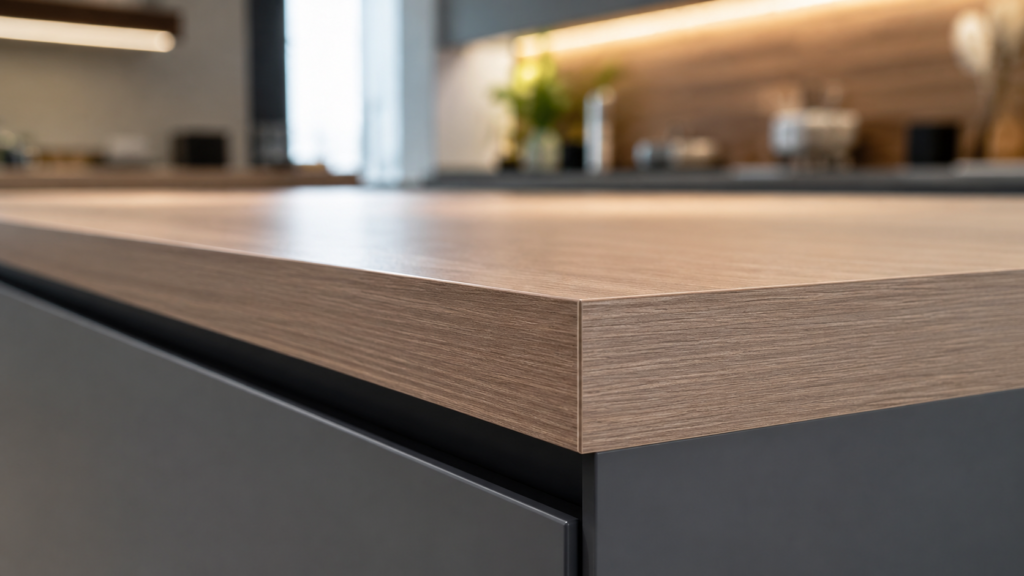
Edge Banding Glue Line control is one of the details that defines premium cabinetry. A clean edge is not created by glue alone; it comes from stable material preparation, adhesive control, pressure, trimming, scraping, buffing, and machine consistency.
For cabinet manufacturers targeting higher-end markets, reducing the Edge Banding Glue Line is a practical way to improve product appearance, reduce rework, and make every panel look more refined before it reaches the customer.
FAQ
What is an Edge Banding Glue Line?
An Edge Banding Glue Line is the visible seam between the panel and the edge band, usually caused by adhesive thickness, color contrast, pressure, temperature, or trimming quality.
Why does edge banding show a black line?
Black lines usually come from gaps, glue color mismatch, dust, poor pressure, uneven board edges, or inaccurate trimming.
How do you reduce visible glue lines in edge banding?
Use stable glue temperature, correct glue amount, clean board edges, proper pressure, accurate trimming, scraping, buffing, and a calibrated automatic edge banding machine.
What is invisible seam technology?
Invisible seam technology is a process approach that reduces visible joints through better bonding, trimming, scraping, polishing, and material matching.
Can a fully automatic edge banding machine remove glue lines completely?
It can greatly reduce visible seams, but final quality still depends on board quality, glue type, edge band material, temperature, pressure, and machine adjustment.